
Digital advertising is always changing fast. Recent shifts in technology are already changing how brands reach their audience. We are looking toward a future where smart systems lead the way in every campaign.
By the year 2026, artificial intelligence marketing will define success for every business. The tools we see today are just the start of this huge wave. These advances allow for deeper connections with every person who sees an ad.
Using automated solutions helps teams work much faster. High-level strategy now relies on data that updates in real-time. This ensures that your brand stays relevant in an ever-changing world.
Smart tools create a better experience for the consumer. Companies that adopt these changes early will see the most growth. It is an exciting time to be part of this digital transformation.
Key Takeaways
- AI marketing significantly improves work efficiency.
- Customer interactions become much more personalized.
- Real-time data allows for instant strategy shifts.
- Automated tools reduce manual workload for creative teams.
- Brand loyalty increases through better consumer targeting.
- Advertising costs become more effective over time.
The Evolution of AI in Digital Marketing: Where We Stand Today
AI has changed digital marketing a lot. It’s now how brands talk to their audience. Today, we see big steps forward in machine learning marketing and digital advertising AI.
These tools make marketing better and open new ways to talk to customers. AI has made marketing smarter.
For example, OpenAI plans to add ads to ChatGPT. This big change will change how ads work. It will make ads more part of the conversation, not just interruptions.
Some key things about AI in digital marketing today are:
- Machine learning helps sort customers better
- Marketing messages are now more personal
- Campaigns are automated for better results
- AI predicts what will happen in the market
AI has changed how people act online. Now, people like content that feels made just for them. AI helps businesses make this happen for lots of people.
“The future of digital marketing is not just about adopting AI, but about understanding how to leverage it to create meaningful connections with customers.”
In short, AI has changed digital marketing fast and a lot. As we go on, businesses need to keep up to stay ahead.
Hyper-Personalization Through Machine Learning Marketing
Machine learning has changed how businesses talk to customers, making personalization possible like never before. It uses personalization algorithms and deep data analysis. This lets companies make marketing that fits each customer’s likes, actions, and needs.
At the heart of this change is machine learning marketing. It gives businesses the tools and insights to know and guess what customers will do. This helps them make marketing that really works.
Real-Time Customer Behavior Analysis
Machine learning in marketing lets us study customer behavior as it happens. This includes:
Tracking Micro-Moments Across Touchpoints
By watching how customers interact at different places, businesses learn a lot. They find out what moments are key in deciding to buy something.
Behavioral Pattern Recognition
Smart algorithms spot patterns in how customers act. This lets businesses meet customer needs before they even ask. It makes customers happier and more likely to buy.
Dynamic Content Customization at Scale
Machine learning makes it easy to change content for each customer, making sure they get a unique experience. It uses complex algorithms to look at customer data and preferences. This way, content is always just right for each person.
Predictive Product Recommendations That Actually Convert
Predictive product suggestions are a big deal in machine learning marketing. By studying what customers like and do, businesses can guess what they’ll want next. This makes customers happier and helps businesses sell more.
As machine learning gets better, so will personalizing marketing. Companies that use this tech will offer amazing customer experiences. They’ll also do well in the long run.
Automated Marketing Strategies Revolutionizing Campaign Management
In 2026, automated marketing strategies will change how we manage campaigns. They use AI to make them better. This change is not just a trend; it’s essential for businesses to keep up in the digital world.
Automated marketing lets campaigns improve on their own. This means they get better based on data analysis in real-time.
Self-Optimizing Campaigns Without Human Intervention
Campaigns can now adjust themselves using machine learning. This lets marketers set up campaigns that learn from customer interactions. They adapt to get the best return on investment.
- Continuous Improvement: Campaigns are always being checked and improved.
- Data-Driven Decisions: Decisions are made with real-time data, keeping marketing in line with customer behavior.
- Reduced Manual Effort: Marketers can focus on strategy, not just optimization.
Intelligent Budget Allocation Across Channels
Automated marketing also helps with smart budgeting across channels. AI looks at data to figure out where to spend the most.
Real-Time Spend Adjustments
Marketers can adjust spending as needed. This means more money goes to channels that work well and less to those that don’t.
ROI-Driven Resource Distribution
Resources are given to channels based on their ROI. This helps make marketing campaigns more profitable.
Seamless Multi-Channel Campaign Coordination
Automated marketing also makes coordinating campaigns across channels easy. This keeps marketing messages consistent, improving the customer experience and campaign success.
By using automated marketing, businesses can make their campaign management better. Google’s Direct Offers pilot shows the future of paid search is more direct and personal. This highlights the role of automation in achieving such precision.
AI-Powered Content Creation: From Conception to Publication
Content creation is changing fast with AI. Old ways of making content are being updated. Now, marketers can make great content quicker and easier.
Automated Copywriting for Ads and Landing Pages
AI tools can now write ads and landing pages that grab attention. They look at what works and match it to the brand’s voice. This way, they create content that speaks to the audience.
Key benefits of automated copywriting include:
- Rapid content generation
- Consistency in brand voice
- Data-driven optimization
AI-Enhanced SEO Content Optimization
AI is changing SEO by looking at lots of data. It finds trends that help content rank better in search engines.
Keyword Integration and Search Intent Matching
AI tools add keywords smoothly and make sure they match what people are searching for. This makes content more relevant and boosts rankings.
Content Gap Analysis and Topic Suggestions
AI finds where content is missing and suggests new topics. These topics are likely to do well and fill gaps in content strategy.
| Feature | Description | Benefit |
|---|---|---|
| Keyword Integration | AI optimizes content with relevant keywords | Improved search engine rankings |
| Content Gap Analysis | Identifies gaps in content strategy | Opportunities for new content creation |
| Topic Suggestions | Provides suggestions for new topics | Enhanced content relevance and engagement |
Video, Image, and Visual Content Generation
AI is also making visual content like videos, images, and graphics. It can create logos, banners, and more. It can even change designs quickly and keep the brand style consistent.
AI is changing marketing by making it easier to create lots of great content. As AI gets better, we’ll see even more cool uses in content creation.
Digital Advertising AI: The New Era of Programmatic Excellence
In 2026, AI is changing digital advertising. It brings new levels of precision and efficiency. AI is not just a small step forward; it’s a big change in how businesses reach their audience.
Next-generation programmatic advertising platforms lead this change. They use AI to make ad buying faster and better. They can quickly find the best ways to reach people, making ads more effective.
Next-Generation Programmatic Advertising Platforms
Today’s programmatic platforms use advanced AI. They can guess what people will do next, make ads personal, and improve campaigns on the fly. This helps advertisers meet their goals better than ever.
Precision Audience Targeting and Segmentation
Digital advertising AI is great for precision audience targeting and segmentation. It looks at lots of data to find the best audience groups. Then, it makes ads that speak to these groups.
Lookalike Audience Creation
AI helps create lookalike audiences. It finds new people who are like your current customers. This way, advertisers can reach more people who might be interested in what they offer.
Contextual Targeting Beyond Cookies
Contextual targeting is key now that third-party cookies are gone. AI lets advertisers find people based on what they’re looking at, not just their personal info. This is better for privacy and works well too.
Meta’s new privacy policy lets it use AI data for ads on Facebook, Instagram, and WhatsApp. This shows how fast digital advertising is changing. Keeping up with tech and privacy is key.
The future of digital ads is all about AI. Businesses that get on board will do well in this fast-changing world.
Smart Marketing Solutions Transforming Customer Interactions

Smart marketing solutions are changing how we interact with customers. They use new technologies to make customer experiences better. This makes talking to businesses more personal and helpful.
Conversational AI and Advanced Chatbot Capabilities
Conversational AI is changing customer service. It lets businesses give instant and personalized support. Chatbots can now handle tough questions, suggest things based on what you like, and even guess what you might need next.
AI characters can quickly answer hard questions. They can explain things in a way you understand. They also learn about you over time and know when you’re stressed or confused.
Real-Time Sentiment Analysis for Customer Communications
Real-time sentiment analysis helps businesses know how customers feel. This is key for giving support that really understands and helps.
Emotion Detection and Response Adaptation
By knowing how customers feel, businesses can answer in a way that really meets their needs. This makes customers happier and more loyal to the brand.
Proactive Customer Support Initiatives
Proactive support means solving problems before they happen. Businesses use data and AI to start support early. This makes the customer experience even better.
For example, AI can look at your data to see if you might have a problem. Then, it can start helping you right away. This way, you get the help you need quickly and on point.
Data-Driven Marketing: Turning Insights Into Action
In 2026, data-driven marketing will be key in shaping business strategies. It’s about analyzing lots of data and using it to make smart marketing plans. This is what makes some campaigns stand out.
Predictive analytics is a big part of data-driven marketing. It lets marketers guess how well a campaign will do.
Predictive Analytics for Campaign Performance Forecasting
Predictive analytics uses old data and new tech to guess what will happen next. In marketing, it helps guess how a campaign will do.
Conversion Rate Predictions
By looking at past data, predictive models can guess how many people will buy. This helps marketers change their plans to get better results.
Seasonal Trend Anticipation
It also spots seasonal trends. This lets marketers plan their campaigns for the busiest times.
For example, Adobe Analytics shows AI helped a lot during the 2025 holiday season. Traffic to retail sites from AI jumped 693% in November and December. Knowing this helps plan for the future.
Customer Lifetime Value Modeling and Optimization
Customer lifetime value (CLV) modeling is also important. It shows how much value a customer will bring over time.
By improving CLV, marketers can focus on the most valuable customers. They can make their marketing better to get more out of it.
Market Trend Identification Through Big Data Analysis
Big data analysis is key for finding market trends. It looks at lots of data to find patterns and trends that are hard to see other ways.
| Trend | Description | Impact on Marketing |
|---|---|---|
| Personalization | Increased use of AI for personalized customer experiences | Higher engagement rates |
| Predictive Analytics | Use of data to predict future customer behavior | Improved campaign performance |
| Omnichannel Marketing | Integration of marketing efforts across multiple channels | Consistent customer experience |
AI Marketing: Elevating Email and Social Media Engagement
In 2026, AI will change how businesses talk to their audience on email and social media. Marketers are using AI to make their campaigns more personal and effective.
Email Campaign Optimization From Subject Lines to Send Times
AI is making email marketing better by improving everything from subject lines to when emails are sent. This means emails are not just opened but also engage the reader.
A/B Testing Automation
AI makes A/B testing easier by testing different parts of an email campaign at once. It finds the best combinations without needing human help.
Key benefits include:
- Increased open rates
- Improved click-through rates
- Enhanced conversion rates
Personalized Email Content Generation
AI can create personalized email content using customer data and preferences. This leads to more meaningful interactions.
“The future of email marketing lies in its ability to personalize and adapt to individual customer needs, making AI a critical tool in this endeavor.”
Social Media Content Strategy and Performance Enhancement
AI is changing social media marketing by analyzing lots of data to predict content success. It suggests ways to improve.
AI-driven social media strategies can:
- Analyze audience engagement patterns
- Predict content virality
- Optimize posting schedules
AI-Driven Influencer Discovery and Partnership Management
In 2026, AI will help find creators who really connect with your audience. It uses advanced algorithms to check if an influencer is a good fit.
Using AI for finding influencers means brands can choose partners based on data. This leads to better collaborations and a higher return on investment.
Voice Search and Visual Recognition: The Next Frontier
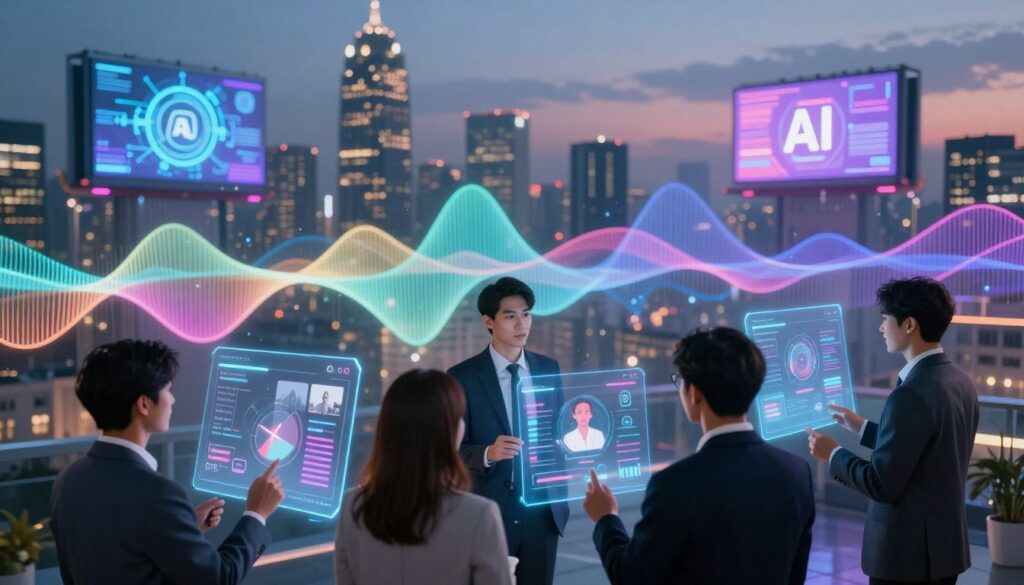
AI advancements are bringing voice search and visual recognition to the forefront in digital marketing. These changes are reshaping how people search and interact with brands online. Businesses need to keep up with these shifts to stay competitive.
Gartner says up to 25% of searches will go to AI chatbots and virtual agents by 2026. This big change highlights the need to optimize for voice-activated shopping assistants.
Optimizing for Voice-Activated Shopping Assistants
Voice-activated shopping assistants are gaining popularity. They let people search and buy products with voice commands. To make the most of this trend, businesses must make their content voice search-friendly.
Conversational Query Optimization
Optimizing for conversational queries means making content sound natural and conversational. This means using long-tail keywords and phrases that sound like how we speak.
For example, instead of “best Italian restaurants,” aim for “what are the best Italian restaurants near me?” This targets voice search queries more effectively.
Voice Commerce Integration
Integrating voice commerce is key for businesses wanting to tap into voice-activated shopping. It’s about making product info easily accessible and actionable through voice commands.
By adding voice commerce features, businesses can offer a smooth shopping experience. Customers can buy products easily with voice commands.
“The rise of voice search is not just about technology; it’s about changing consumer behavior and expectations. Businesses must adapt to this new landscape to remain relevant.”
Visual Search Technology for Enhanced Shopping Experiences
Visual search technology is changing the shopping game. It lets consumers search using images, making product discovery more intuitive and engaging.
| Benefits of Visual Search | Description |
|---|---|
| Enhanced User Experience | Visual search makes finding products through images more intuitive. |
| Increased Conversions | It offers a more engaging search experience, boosting conversion rates. |
| Improved Discovery | Visual search helps consumers find new products and brands they might not have found before. |
As voice search and visual recognition tech advance, businesses must stay ahead. Adopting these trends can lead to a more engaging, intuitive, and personalized shopping experience for customers.
Navigating Privacy, Ethics, and Compliance in Artificial Intelligence Marketing
AI is changing digital marketing a lot. It’s important to understand privacy, ethics, and rules. AI makes marketing better but also raises big questions about data and ethics.
Adapting to Evolving Data Privacy Regulations
Data privacy laws are always changing. Laws like the California Consumer Privacy Act (CCPA) and the General Data Protection Regulation (GDPR) set new rules for protecting data.
CCPA, GDPR, and Emerging US State Laws
Marketers need to keep up with these changes. They must understand how CCPA and GDPR affect their AI marketing. New US state laws will also play a big role, so staying ahead is key.
First-Party Data Strategies
Collecting data directly from people is now more important. This approach helps follow privacy laws and builds trust with customers.
Building and Maintaining Consumer Trust Through Transparency
Being open is vital for trust in today’s world. Marketers must clearly explain how they handle consumer data.
People are getting smarter about their data. They might not like AI that feels too personal. So, finding a balance between personalization and privacy is critical.
By being open and following new privacy rules, marketers can earn trust. This makes their AI marketing more effective.
Preparing Your Marketing Team for the AI-Driven Future
To stay ahead in digital marketing, your team needs to use AI well. AI is getting more important in marketing plans. It’s essential to have people who really get AI, know when to use human judgment, and adapt their roles to AI’s power.
Essential AI Marketing Skills for 2026 and Beyond
Some skills will be key for marketing pros in the AI future. They need to understand complex data, handle AI tools, and balance automation with creativity.
Data Literacy and Analytics Proficiency
Data literacy is now a must-have in marketing. People should be able to analyze data, find important insights, and make smart choices. Knowing how to use analytics tools and understand data trends is vital for improving campaigns and planning strategies.
AI Tool Management and Oversight
Knowing how to manage and watch over AI tools is critical. This means knowing how to use AI right, check its performance, and tweak plans as needed.
Training Programs and Professional Development Resources
Organizations should invest in training for AI skills. This includes workshops, online classes, and certifications in AI marketing, data literacy, and analytics.
- AI and machine learning courses
- Data analysis and interpretation training
- AI tool management and oversight programs
Balancing Human Creativity with Personalization Algorithms
AI is great for personalization, but we must not forget human creativity. Marketers should use AI to boost their creative work, not replace it. They should learn to use data insights to guide their creative choices and make better marketing campaigns.
By focusing on these areas and providing ongoing training, marketing teams can excel in an AI-driven world.
Conclusion
Looking ahead, AI will be key in marketing’s future. The basics remain the same: know your audience, meet them where they are, and offer real value. The ways we do this are changing, but the core goal stays the same.
Using AI marketing is now essential to keep up. It helps improve how we talk to customers, make our campaigns better, and grow our businesses. AI is here, and it’s changing marketing forever.
For businesses to succeed, they must be open to change. By embracing AI, they can take advantage of new opportunities. This will help them achieve success in the years to come.

