
The way we work has changed forever. In 2025, this roving movement has grown beyond just tech roles into every global industry.
This shift is changing how modern companies work across international borders. Businesses now see that top talent can work effectively without being in a traditional office.
Living and working from anywhere is now a reality for many professionals. High-speed internet and flexible policies let people explore new cultures while staying productive.
This lifestyle offers unique chances for growth and personal freedom that were once impossible to find. It empowers individuals to balance their careers with their passion for travel.
Yet, this path also brings new hurdles that require smart solutions. From complex tax rules to staying connected in remote areas, the landscape is constantly evolving.
Remote roles are solidifying their place as a core part of the modern workforce. Let’s dive into the upcoming trends and challenges of this modern work era.
Key Takeaways
- Remote work is now standard in many global industries.
- 2025 shows a significant rise in international work travel.
- Companies are creating more flexible hiring policies.
- Reliable technology makes global operations much easier.
- Personal freedom is a top priority for today’s workers.
- New legal and tax systems are adapting to mobile workers.
1. The Digital Nomad Movement Reshapes How We Work
The way we work is changing a lot because of the digital nomad movement. It’s not just about moving places; it’s about living a life where work and travel mix. We use technology to stay connected and keep working.
From Niche Experiment to Global Workforce Trend
The digital nomad movement has grown a lot. What was once a special lifestyle for a few is now a big trend worldwide. More people want to work from anywhere, thanks to better technology and a desire for balance.
The COVID-19 pandemic really helped this change. Lockdowns and social distancing made remote work common. It showed that working from home works well.
How the Pandemic Accelerated Remote Work Adoption
The pandemic made remote work more popular, fast. Companies started using digital tools to help their employees work from home. This made working from anywhere more accepted.
Some key stats show how the pandemic changed remote work:
| Region | Pre-Pandemic Remote Work Rate | Post-Pandemic Remote Work Rate |
|---|---|---|
| North America | 15% | 40% |
| Europe | 10% | 35% |
| Asia Pacific | 5% | 25% |
The table shows a big jump in remote work in different places after the pandemic. This change helped the digital nomad community grow. People are now more okay with working from anywhere and enjoying location independence.
As we adjust to the new normal, the digital nomad movement will keep growing. More places and companies are accepting remote work. This opens up new chances for digital nomads, making it an exciting time for those who love location independence.
2. Who Are Today’s Digital Nomads?
The digital nomad community is growing fast. More people are choosing remote work for a flexible lifestyle.
Age, Background, and Professional Profiles
More people aged 30-39 are becoming digital nomads in 2025. They want a better work-life balance and freedom to travel.
Today’s digital nomads are not just young solo travelers. They are often professionals with families or partners. They come from various backgrounds like tech, marketing, and design. Many have moved from office jobs to online freelancing for a more fulfilling career.
Popular Industries and Freelance Remote Jobs
Some industries fit the digital nomad lifestyle better than others. Tech and software development are top choices because they need just a laptop and internet. Other popular fields include digital marketing, content creation, and e-learning.
Freelance remote jobs are becoming more common. Digital nomads offer services like writing, graphic design, and consulting. Online platforms make it easy to find work while traveling.
Families and Couples Joining the Movement
The digital nomad lifestyle is now for families and couples too. They are drawn by the chance to spend quality time together and explore new places.
For families, the nomadic life can be tough but also educational for kids. Couples can balance their careers and travel together.
3. Technology Enabling the Work From Anywhere Revolution
Technology is key to the work-from-anywhere movement. It lets people work from anywhere in the world. The digital nomad lifestyle has grown thanks to tech advancements.
Must-Have Tools for Location Independence
Digital nomads need certain tools to work well from anywhere. They use project management software like Trello and Asana. These tools help organize tasks and work with team members in different places.
Secure and reliable communication tools are also vital. Zoom and Slack are must-haves for remote teams. They make sure everyone can talk and meet easily online.
Global Connectivity and Internet Infrastructure
Having high-speed internet is essential for digital nomads. Places with good internet are popular with remote workers.
Also, co-working spaces with fast internet are great for digital nomads. They offer a place to work while traveling.
Collaboration Software Keeping Teams Connected
Collaboration software has changed how remote teams work together. Tools like Notion and Google Workspace help teams work on documents and share resources. They also track progress in real-time.
These tools boost productivity and create a sense of community. They help team members who are far apart feel connected.
4. Where Digital Nomads Are Heading Next
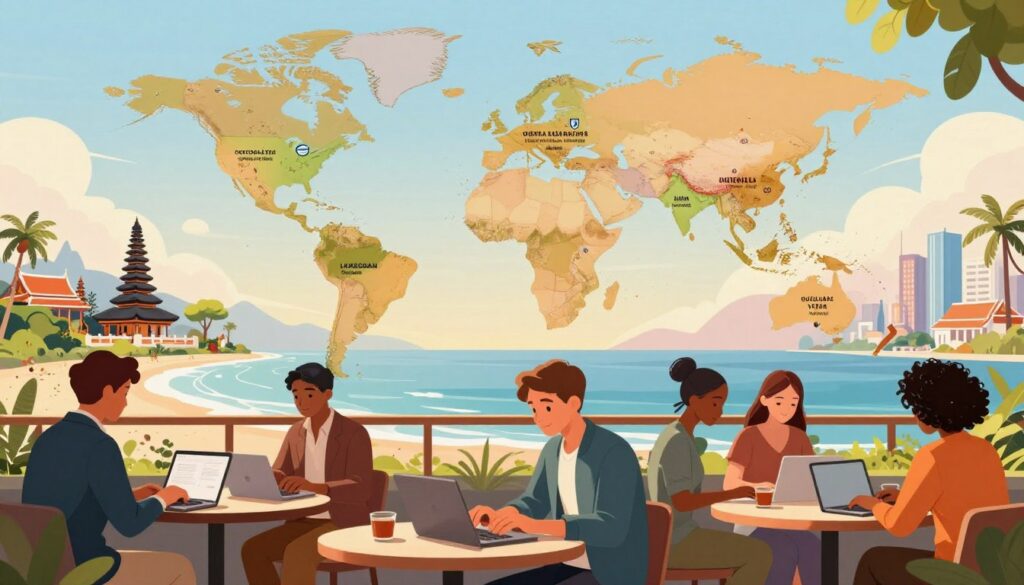
Digital nomads are always on the lookout for the perfect work and travel spot. As more people join this lifestyle, places around the world are changing to meet their needs.
Countries With Digital Nomad Visas
Many countries now have visas for digital nomads. Places like Portugal, Spain, and Mexico are popular. They offer great culture, lifestyle, and work setup.
Portugal’s Non-Habitual Residence (NHR) visa is a hit for its tax benefits and welcoming vibe. Spain’s Golden Visa also attracts remote workers with its residency offer for investment.
Co-Working Spaces and Nomad Communities
Co-working spaces and strong nomad communities draw digital nomads. Chiang Mai in Thailand and Medellín in Colombia are top choices. They have great communities and solid infrastructure.
These places offer more than just a workspace. They provide a network of people who get what it’s like to be a digital nomad. This community support is key for those facing isolation.
New Destinations Beyond the Usual Spots
New places are becoming popular for digital nomads. Southeast Asia, like Vietnam and Cambodia, is affordable and has a great quality of life.
In Europe, Croatia and Georgia are gaining fans. They mix culture, history, and modern comforts in a unique way.
What Makes a Location Ideal for Travel While Working
Digital nomads look at cost of living, internet, and cultural experiences when choosing a place. A spot that balances these well is often chosen.
Language, safety, and local support also matter a lot. These factors help decide if a place is right for digital nomads.
5. The Real Costs of the Nomadic Lifestyle
More people are becoming digital nomads, and it’s important to know the costs. This lifestyle offers freedom but also financial challenges. Managing these challenges is key.
Monthly Budget Breakdowns by Region
The cost of living as a digital nomad changes with the region. In Southeast Asia, costs range from $1,000 to $2,000 a month. This includes living expenses like food and transport.
In European cities like Berlin or Paris, costs can go over $3,000 a month. Your lifestyle choices, like where you live, affect your expenses. Co-working spaces can cost between $100 to $500 a month, depending on the location and what’s included.
Income Requirements for Online Freelancing Success
To keep up with the digital nomad lifestyle, a steady income is essential. The income needed varies by region, lifestyle, and type of freelance work. Having a variety of clients helps keep income stable.
Digital nomads must keep their skills sharp to stay competitive. This includes both technical and soft skills for good client relationships. Online freelancing success depends on adapting to new technologies and work settings.
Navigating Taxes Across Multiple Countries
Handling taxes in different countries is a big challenge for digital nomads. They might face tax laws in their home country, their current country, or both. It’s vital to understand these laws to avoid legal and financial issues.
It’s wise for digital nomads to get help from tax experts who know international tax law. This ensures they follow all tax rules and can plan their taxes wisely. Tax planning is a critical part of managing finances for digital nomads.
6. Obstacles and Growing Pains for Digital Nomads
Digital nomads are changing how we work, but they face new challenges. These challenges test their strength and ability to adapt. Despite the benefits of working from anywhere, they meet obstacles that affect their life quality and work output.
Visa Restrictions and Immigration Hurdles
One big challenge is dealing with visa rules and immigration laws. Each country has its own rules for work visas. Digital nomads need to know these rules to avoid legal trouble.
Understanding visa options is key. Some countries have special visas for remote workers. Others might need more traditional permits.
- Researching visa requirements before traveling
- Consulting with immigration experts or lawyers
- Staying up-to-date with changing immigration laws
Healthcare Access and Insurance Solutions
Getting good healthcare is a worry for digital nomads. Healthcare systems vary by country. They need to make sure they have good health insurance.
Digital nomads can look into international health insurance plans that work in many countries. It’s also good to check out local healthcare and the quality of care.
Combating Isolation and Building Meaningful Connections
It’s hard to keep social connections when you’re always moving. Digital nomads often leave their networks behind.
To fight loneliness, digital nomads can join online groups and go to remote worker events. Co-working spaces are also great for meeting others.
Maintaining Productivity Across Time Zones
Working across time zones is tough. Digital nomads need to be flexible and adjust to new time zones. They must stay productive and meet deadlines.
Using time zone-friendly tools and setting clear work hours can help. This way, digital nomads can stay on track.
7. How Employers Are Embracing Remote Work Culture
The old office setup is changing as employers meet the needs of a nomadic lifestyle. Many companies are now adopting remote-first policies. They see the benefits of a more flexible and distributed workforce.
Companies Going Fully Remote-First
Several big companies have switched to fully remote-first models. This lets employees work from anywhere. They want to attract and keep the best talent in a tough job market.
Examples of companies that have gone remote-first include:
- Microsoft
Flexible Work Policies Supporting Location Independence
Flexible work policies are key for digital nomads and remote workers. They let employees manage their work while traveling or living in different places.
Some important parts of flexible work policies are:
- Flexible hours
- Remote work stipends
- Autonomy in work scheduling
Best Practices for Managing Global Teams
Managing global teams is different from traditional office teams. Employers need to use technology and good communication to keep teams working well together.
| Best Practice | Description | Benefits |
|---|---|---|
| Regular Virtual Meetings | Hold regular video meetings to keep team members connected and informed. | Enhances team collaboration and reduces feelings of isolation. |
| Asynchronous Communication | Use tools that allow asynchronous communication to accommodate different time zones. | Improves productivity and reduces delays in communication. |
| Clear Goal Setting | Set clear goals and expectations for team members to ensure everyone is aligned. | Boosts team performance and accountability. |
By using these best practices, employers can manage global teams well. This supports digital nomads and boosts employee happiness. It also helps the company succeed.
8. The Future of Digital Nomads: What’s Coming in 2025 and Beyond
The future of digital nomadism looks bright. New trends and technologies will change how we work from anywhere. Governments, service providers, and tech companies are adapting to meet digital nomads’ needs. This makes this lifestyle more accessible and sustainable.
More Countries Rolling Out Nomad-Friendly Policies
Governments worldwide see the economic benefits of digital nomads. Countries like Estonia, Barbados, and Portugal have introduceddigital nomad visas. This makes it easier for remote workers to live and work there. More countries are expected to follow suit.
Nomad-friendly policies include easy visa applications, tax breaks, and access to co-working spaces. These features help remote workers thrive.
| Country | Visa Type | Key Benefits |
|---|---|---|
| Estonia | e-Residency | Digital residency, simplified business registration |
| Barbados | Barbados Welcome Stamp | 12-month visa, tax exemptions |
| Portugal | Non-Habitual Residence (NHR) | Tax benefits, residency permit |
Specialized Services Catering to the Nomad Market
Specialized companies are now catering to digital nomads. They offer co-working spaces, accommodation, insurance, and community platforms. These services help nomads connect and thrive.
Emerging Technologies Transforming Remote Collaboration
New technologies are improving the digital nomad experience. Virtual reality (VR) and augmented reality (AR) are changing remote collaboration. They enable virtual meetings, team building, and better communication tools.
Sustainable and Responsible Nomadism
The digital nomad community is focusing on sustainability. Efforts include eco-friendly travel and work practices. Initiatives include carbon offsetting and sustainable living in nomad communities.
By embracing these trends, digital nomads can lead a more sustainable and fulfilling life.
9. Should You Become a Digital Nomad?
Many are curious about the digital nomad lifestyle. It’s not just about traveling and working. You need to think about your skills, money, and what you like.
Understanding this lifestyle is key. Digital nomads are more than just remote workers. They live a life that mixes work and travel. It’s both freeing and tough.
Essential Skills for Thriving in a Nomadic Lifestyle
To do well as a digital nomad, you need certain skills. These include:
- Self-motivation and discipline
- Adaptability and flexibility
- Strong communication and networking skills
- Ability to work independently
- Resilience and problem-solving skills
Having these skills helps you handle remote work and travel. For those into freelance remote jobs, these skills are vital.
Practical Steps to Get Started
Here are steps to start your digital nomad journey:
- Check your finances and make a budget.
- Look into places to go and visa rules.
- Plan for health insurance and medical care.
- Get good tech and tools for remote work.
- Join digital nomad groups to meet others.
By following these steps, you can prepare for the digital nomad life. It’s full of challenges and chances.
Myths Versus Reality About Life on the Road
There are many myths about digital nomads. Let’s look at a few:
| Myth | Reality |
|---|---|
| Digital nomads have a lot of free time. | While it’s flexible, it often means long hours and hard work. |
| It’s easy to travel and work at the same time. | It’s hard to balance work and travel and needs good planning. |
| Digital nomads are always on vacation. | They often work long hours and don’t have as much free time as people think. |
Knowing the truth about digital nomads helps you decide if it’s for you. As more people become digital nomads, it’s clear it’s not for everyone. But for those ready, it’s very rewarding.
10. Conclusion
The digital nomad movement is changing how we work and live. It offers new chances for working from anywhere and exploring different cultures. This trend is growing, showing that remote work is now a big part of the global workforce.
Countries are starting to offer digital nomad visas. Companies are also changing their work policies to support people who work from anywhere. With the right tools and attitude, people can do well in this new world. They get to enjoy different cultures and have more flexibility.
Looking ahead, technology, work, and travel will keep shaping the digital nomad lifestyle. By understanding the good and bad of remote work, we can move forward in this exciting new world.

