
Starting a creative shop is easier than ever. Many wonder if print on demand is worth it in today’s digital world.
The future looks bright. Experts predict the market will hit $87.1 billion by 2033. This is a 26.9% yearly growth rate.
Online printing technology has advanced. Now, anyone can design and sell products without inventory. This meets the demand for unique, personalized items.
But, can you succeed in this space? If you focus on quality and niche selection, the chances of making a profit are higher than ever.
Key Takeaways
- The industry expects to hit $87.1 billion in value by 2033.
- Annual growth rates for the sector average a strong 26.9%.
- Low entry barriers allow new creators to start with minimal risk.
- Consumer desire for personalized products continues to drive sales.
- Success depends heavily on finding a specific, underserved niche.
- Modern technology removes the need for expensive inventory storage.
What Is Print-on-Demand and How Did It Evolve?
Print-on-demand started small but has grown a lot. It’s all thanks to new printing tech. This model means products are made only when someone orders them. This way, there’s no need to store lots of products.
This change has made running a business easier. It lets companies be more flexible and save money upfront. The growth of print-on-demand is linked to digital printing advancements. These have made printing faster, cheaper, and better quality.
The Early Days of Custom Printing
At first, making custom prints was hard work. It used old methods like screen or offset printing. These needed big orders, which was tough for small groups or solo people.
It was pricey and slow, which limited creativity. But, it set the stage for future improvements.
The Digital Printing Revolution
Digital printing changed everything. It brought high-quality prints without big orders. This made making custom products on demand possible.
This tech boost helped print-on-demand grow. Now, businesses can offer many custom items without keeping lots of stock.
Digital printing has really opened up custom printing. It lets anyone with a design idea make and sell their own products.
The Current State of the Print-on-Demand Market in 2024
The print-on-demand market is growing fast. It’s becoming more competitive. This is because people want more customized products and new digital printing tech.
Market Size and Growth Projections
The global print-on-demand market is now worth $10.21 billion. It’s expected to grow even more, reaching $87.1 billion by 2033. This shows a big increase in value over time.
Key Industry Players and Competition Landscape
The market is filled with big players. They offer everything from print management to a wide range of suppliers.
Let’s look at some key players and their stats:
| Company | Market Share (%) | Specialization |
|---|---|---|
| Printful | 25 | Comprehensive print management |
| Printify | 20 | Multi-supplier network |
| Gelato | 15 | Global print-on-demand |
The market’s growth comes from more customized products and better tech. This tech makes production and shipping quicker. Knowing the market’s current state and future is key for businesses to succeed.
The Major Advantages of Print-on-Demand Business
The print-on-demand business model has changed how entrepreneurs do e-commerce. It offers many benefits. This model lets you sell customized products without keeping inventory. This cuts down on financial risks seen in traditional retail.
Zero Inventory and Minimal Startup Costs
Print on demand means no inventory costs. Traditional retail needs a lot of money for inventory upfront. With print on demand, products are made and shipped only when ordered. This means no storage or management costs.
The benefits of zero inventory include:
- Reduced financial risk
- No inventory holding costs
- No need for warehouse management
Unlimited Product Variety and Customization
Print-on-demand services let you offer many personalized products without stock. You can try out different product lines and designs without a big investment. Customizing products for customers is also a big plus. It lets you serve specific markets and trends.
Scalability Without Warehouse Management
As your business grows, print on demand services grow with it. You don’t have to manage a warehouse or handle shipping. The print-on-demand provider takes care of production and shipping. This lets you focus on marketing and sales.
Compared to traditional retail or dropshipping, print-on-demand is easier. It lets entrepreneurs tap into trends and demand without the hassle of logistics.
The Challenges and Drawbacks You Need to Know
Print-on-demand businesses face many challenges, like lower profits and tough competition. This model is flexible and saves money upfront. But, knowing the downsides is key to thriving in this competitive field.
Lower Profit Margins Compared to Bulk Manufacturing
Print-on-demand businesses often see lower profits than bulk manufacturing. This is because each item is made one at a time, making costs higher. To make up for this, businesses can:
- Design products that many people want
- Set prices wisely
- Build a strong brand to charge more
Quality Control and Longer Shipping Times
Quality control is a big issue in print-on-demand. Because items ship directly from suppliers, businesses have less control. This can cause quality issues and longer delivery times, affecting customer happiness. To fix this, businesses can:
- Choose reliable print services for quality and fast shipping
- Tell customers about shipping and product details
- Have a good customer service team for any problems
Intense Market Saturation and Competition
The print-on-demand market is getting very crowded. With more businesses joining, it’s hard for new ones to be noticed. To stand out, businesses should focus on specific markets, unique designs, and good marketing. Using online printing services with lots of product options can also help businesses be different.
By understanding these challenges and finding ways to overcome them, print-on-demand businesses can succeed in this complex industry.
Is Print-on-Demand Actually Profitable in 2024?
In 2024, many entrepreneurs wonder if print-on-demand is a good business idea. Its success depends on several things like the niche, marketing, and prices.
To see if it’s profitable, knowing realistic revenue and income expectations is key. The money made from print-on-demand changes a lot. It depends on the seller’s skills, marketing, and the niche they choose.
Realistic Revenue and Income Expectations
Print-on-demand earnings vary for new and experienced sellers. Newbies start with lower earnings as they grow their brand and customer base.
Monthly Earnings for Beginners vs Established Sellers
Beginners can make $100 to $1,000 a month at first. But, experienced sellers can make much more. They can earn $5,000 to $10,000 a month or more, based on their marketing and product demand.
Time Investment Required for Success
Success in print-on-demand takes time. It needs a lot of time investment in designing, marketing, and customer service. Sellers should plan to spend several hours a week on their business, at least in the beginning.
Cost Breakdown and Pricing Strategies
Knowing the costs is key to setting good prices. Costs include the product itself, printing, and shipping. Sellers must include these costs in their pricing to make a profit.
Good pricing means finding a balance between being competitive and making money. Sellers should look at what competitors charge and what their customers are willing to pay. This way, they can set prices that are both competitive and profitable.
For example, sellers can use premium pricing for unique or high-quality designs. Or, they can choose competitive pricing to draw in more customers. The goal is to find a balance that fits their niche and target market.
Best Product Categories for Print-on-Demand Success

Finding the right product niches is key for a successful print-on-demand business. Successful businesses focus on categories with high demand, customization options, and good prices.
Let’s look at some top product categories for print-on-demand success.
Apparel and Fashion Items
Apparel is a top choice in print-on-demand, with items like t-shirts, hoodies, and hats. The demand comes from fashion trends, hobbies, and personal expression.
- Fashion trends and seasonal events
- Niche interests and hobbies
- Brand identity and marketing
- Personal expression and unique gifts
To do well in this area, keep up with fashion trends. Offer designs that your audience will love.
Home Decor and Personalized Products
Home decor is getting more popular, with items like customized mugs, posters, and canvas prints. These let people make their homes unique.
Home decor is loved for being both useful and personal. To succeed, create designs that match your audience’s style.
Accessories, Stationery, and Niche Items
There are many other profitable categories in print-on-demand. These include accessories like phone cases and tote bags, and stationery items such as notebooks and stickers.
Niche items, like pet products or gaming accessories, can also do well. The trick is to find a balance between being specific and appealing to a wide audience.
Successful businesses often sell a variety of products. This helps them reach more customers and not rely on just one type of product.
How Print on Demand Works: The Complete Process
The print-on-demand process has changed how businesses work. It makes creating custom products easier and more efficient. This method means no need to store inventory or pay for production upfront. It’s great for entrepreneurs and businesses of all sizes.
Design Creation to Customer Order
The journey starts with design creation. Sellers use graphic design software or templates from print-on-demand platforms to create designs. These designs are then uploaded to an ecommerce platform or a print-on-demand service website.
Customers can then browse and choose products. They select their item and place an order. The order details, like product type, size, color, and design, are sent to the print-on-demand service provider.
Print Fulfillment and Order Processing
The print-on-demand service provider then starts print fulfillment. They make the ordered product and ship it directly to the customer. This process is automated, ensuring fast delivery and fewer mistakes.
Print fulfillment services work well with ecommerce platforms. Most offer APIs or plugins for platforms like Shopify, WooCommerce, and BigCommerce. This makes order processing smooth.
Integration with Ecommerce Platforms
Print on demand’s big plus is its integration with ecommerce platforms. This integration makes seamless order processing possible. It also keeps product designs up to date across all sales channels.
Here’s how different ecommerce platforms work with print-on-demand services:
| Ecommerce Platform | Print-on-Demand Service Integration | Key Features |
|---|---|---|
| Shopify | Printful, Printify | Automated order fulfillment, product syncing |
| WooCommerce | Printful, Redbubble | Easy product integration, customizable product options |
| BigCommerce | Printify, Gelato | Multi-channel selling, global shipping options |
Understanding print on demand helps businesses offer customized products. They can do this without worrying about inventory management.
Comparing Top Print-on-Demand Platforms and Print Services
The print-on-demand world is very competitive. Many platforms offer different features and benefits. Businesses have many options when picking the best service.
Printful: A Complete Print Management Solution
Printful is a well-known name in print-on-demand. It provides a full print management solution. Businesses can easily link their online stores with Printful’s services.
Product Range and Base Costs
Printful has a wide range of products, from apparel to home decor. Their prices are competitive, helping businesses save money upfront.
Key Features:
- Wide range of products
- Competitive pricing
- Integration with major e-commerce platforms
Shipping Options and Delivery Times
Printful offers various shipping options. Orders are usually processed in 2-3 business days, making delivery fast.
Printify: A Multi-Supplier Network Approach
Printify connects businesses with a network of suppliers. This approach offers a wide range of products and flexible shipping.
Pricing Structure and Premium Plans
Printify has a tiered pricing system. Premium plans include extra features like priority support and advanced integrations.
“Printify’s multi-supplier network gives businesses the flexibility to choose the best supplier for their needs.”
Global Print Provider Network
Printify’s global network helps businesses reach customers worldwide. Suppliers in different regions can reduce shipping times and costs.
Gelato and Other Notable Alternatives
Gelato is another big name in print-on-demand. It offers a variety of products and services. Other options like Redbubble and Teespring focus on specific niches.
When picking a print-on-demand platform, consider product range, pricing, shipping, and customer support.
Getting Started with Your Print-on-Demand Business
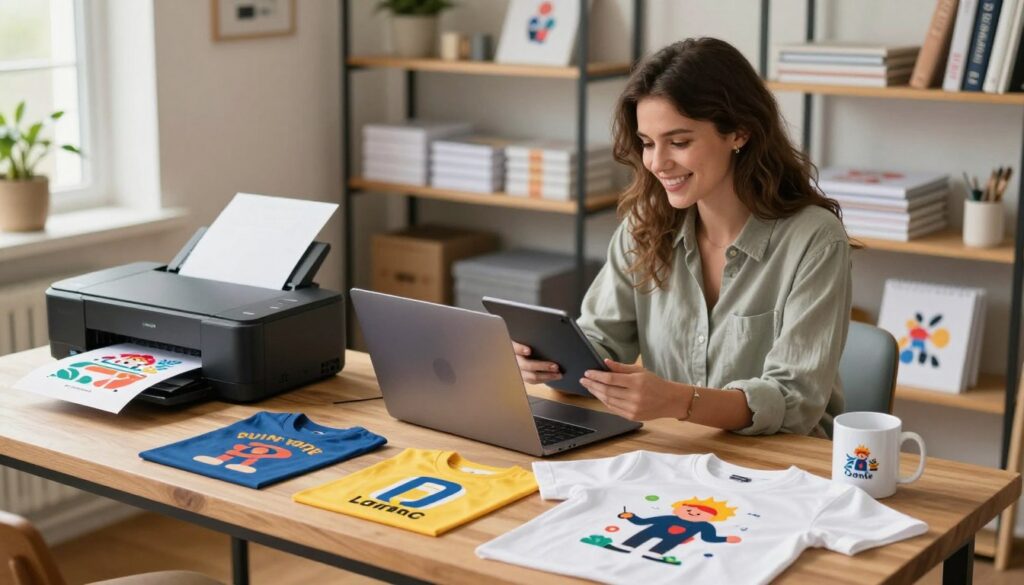
Starting a print-on-demand business needs careful planning and knowing your market well. Success depends on picking the right niche, setting up a smooth online store, and making designs that appeal to your audience.
Choosing Your Niche and Target Audience
Finding a profitable niche is key. Pick something you’re interested in and has a big audience with less competition. Look into popular trends and what people want to find a niche that fits your passions and has market value.
Knowing your audience is also vital. Make buyer personas to help with your designs and marketing. Think about their age, interests, and how they shop to make products they’ll like.
Setting Up Your Online Store
After picking your niche and audience, set up your online store. Choose an ecommerce platform that works well with print-on-demand services.
Shopify Integration for Dropshipping
Shopify is great for print-on-demand businesses because it works well with dropshipping. Shopify’s easy-to-use interface and big app store help you manage your store and connect with suppliers.
Etsy and Alternative Marketplaces
Etsy is good for niche markets focused on handmade or unique items. Also, think about eBay or Amazon for more customers. Each platform has its own rules and fees, so know them before you decide.
Creating Designs That Actually Sell
Design is very important for a successful print-on-demand business. Your designs must look good and match what your audience likes. Keep up with current trends and what people want to make products that sell well.
Take time to learn design skills or work with skilled designers for unique products. Use design tools and software to make creating easier and keep your products looking consistent.
Effective Marketing Strategies for Print-on-Demand
The print-on-demand market is growing fast. To stand out, businesses need to know and use the best marketing strategies. We’ll look at the top tactics to help your online printing business succeed.
Social Media Marketing and Influencer Partnerships
Social media is a treasure trove for print-on-demand businesses. It’s a place to show off products, talk to customers, and grow your brand. Creating engaging content that speaks to your audience is essential. Use Instagram and Facebook to share great product photos and behind-the-scenes looks.
Working with influencers can also boost your brand’s visibility. Find influencers who share your brand’s values and love your products. A study shows influencer marketing can bring a $6.50 return for every dollar spent.
“Influencer marketing is a powerful tool for reaching new audiences and building credibility. By partnering with the right influencers, brands can tap into existing communities and drive sales.”
SEO and Content Marketing for Online Printing
SEO is key for any online business, including print-on-demand. By making your website and content search-friendly, you can get more visitors. Create high-quality, keyword-rich content that answers your audience’s questions and needs.
Content marketing means making and sharing valuable content to attract and keep a specific audience. For print-on-demand, this could be blog posts on design trends, product care, or lifestyle topics related to your products.
| SEO Strategy | Description | Benefits |
|---|---|---|
| Keyword Research | Identifying relevant keywords for your content | Increased search engine rankings |
| On-Page Optimization | Optimizing website elements like titles and meta descriptions | Improved visibility in search results |
| Content Creation | Producing high-quality, engaging content | Attracts and retains target audience |
Paid Advertising and Customer Retargeting
Paid ads are a great strategy for print-on-demand businesses. Google Ads and Facebook Ads let you target specific groups, making sure your ads reach the right people. Retargeting campaigns can also bring back users who visited your site but didn’t buy.
To get the most from your paid ads, keep a close eye on them and adjust as needed. Look at metrics like click-through rates, conversion rates, and return on ad spend.
By using social media, SEO, content marketing, and paid ads, print-on-demand businesses can build a strong marketing plan. Success comes from knowing your audience and tailoring your marketing to meet their needs.
The Future of Print-on-Demand and Dropshipping
Technology and sustainability are leading the way in the future of print-on-demand. As we look ahead, new technologies and changing consumer tastes will shape the industry. This will bring about big changes.
Emerging Technologies
Artificial intelligence (AI) and machine learning (ML) are set to change print-on-demand. They will make design better, production faster, and products more personal. For example, AI can create designs based on what’s popular and what people want.
3D printing and direct-to-garment (DTG) printing are also big advancements. They allow for more detailed and customized items. This opens up new possibilities in print-on-demand.
Sustainability Trends and Market Predictions
Sustainability is key for consumers now. Print-on-demand fits well with this trend because it reduces waste. Companies are also looking into eco-friendly materials and methods.
By 2030, the print-on-demand market is expected to grow. E-commerce growth, better digital printing, and more custom products will drive this. The industry will see chances in niche markets and special products.
The future of print-on-demand and dropshipping will be about tech, green practices, and meeting customer needs. Businesses that keep up with these trends will thrive in this changing world.
Conclusion
Print on demand is a great way for entrepreneurs to start a business. They can sell custom products without having to store them. The print services industry has grown to meet many customer needs. This includes everything from clothes to home decor, all thanks to different custom printing methods.
One of the best things about print on demand is that you don’t need to keep any stock. This means you can start small and grow without worrying about storage. But, it’s not all easy. You might make less money and face tough competition.
To do well, pick a good niche and make designs that people will love. Using smart marketing is also key. By knowing how print on demand works and choosing the right places to sell, you can make the most of the trend for custom items.

